Farro restaurant’s latest home is a Victorian townhouse on a side street not far from busy Kloof Road in the Cape suburb of Gardens. It has a mountain view and is built carefully into the bones of the old house.
Wooden floors, high ceilings and a cosy front bar greet you first. It’s the kind of place for a pre-dinner martini. The style has been described as “unashamedly uncool and old school”.
Walk in for dinner and you’d never guess what the past few years have thrown at owners Alex and Eloise Windebank. Everything is immaculate: paint is fresh, glasses sparkle, the kitchen is so orderly you’d wonder if it’s ever been used.
It has, and it still is — with vigour. The 24-seat restaurant has built a loyal following since its first iteration in Illovo, Joburg. Opened there in 2018, it quickly became a favourite among chefs, restaurateurs and other locals who took their food seriously.

The little restaurant that could
The establishment survived load-shedding, but then came Covid. The owners closed it, hoping it would be a temporary measure — it wasn’t. They lost their restaurant deposit and spent more money to close than they had to open. They took out a loan to clear outstanding supplier debts in full. Many of those suppliers were small operators themselves; it took until 2025 to repay them.
Alex is a British chef, Eloise a former restaurant manager at London’s beloved Venetian eatery chain, Polpo. The couple met on London’s restaurant circuit, and that shared experience shaped Farro’s original Joburg opening.
From the City of Gold and post the Covid mess, Farro moved to Gabriëlskloof wine farm near Botrivier in the Overberg. A storm on Heritage Day washed away the access road, cutting the restaurant off entirely. It stayed closed for six weeks, right at the start of what should have been a strong season.
Farro left Botrivier in 2025 at the end of a three-year lease. This was unrelated to the flood; the Windebanks wanted to move to Cape Town.
Nearly a year ago they opened in Gardens. Soon after that a major water problem — an undisclosed amount owed — left the restaurant unable to operate. It was, Eloise says, a crisis month.
What happened next wasn’t the usual slow slide into obscurity and defeat. Customers rallied, and so did an unlikely coalition of small businesses and business people: guesthouses, local brands, fellow restaurateurs — all of whom understood how thin the margin for error is in the service game. PR consultants close to the Windebanks helped spread the word. The duo raffled fabulous donated prizes and experiences to raise money to keep things ticking over. Watching as legions of supporters got involved on Instagram (where it was publicised) was heartwarming.
Joanne Smith, a reputation management consultant who has previously worked with Farro, believes the community rallied around the restaurant because Farro represents the essence of the local restaurant scene. “A lot of restaurants are small, family-owned and family-run, looking to create one or two jobs … When something happens that puts that entire livelihood at risk, [these people] really understand what it is to feel helplessness.”

Eloise puts the support down to two things: small business owners know exactly how small the buffer is that most operations have, and Farro has a history. The restaurant is eight years old, and many customers have followed it through closures and relocations.
The only way is up
For the first time, Eloise says, the restaurant is operating in a space and format that matches what she and Alex want to do. Guests walk past the bar and open kitchen, then up the original staircase to two small dining rooms; there is no separation between kitchen and dining room or between staff and guests.
The décor reflects the clarity of this space. It’s classic and with a restrained sophistication. A beautiful art deco cabinet on one side of a room was gifted by a loyal customer. The night we go for dinner the large table in the adjacent room is set for regulars.
Eloise runs the floor, front-of-house, articulate and gracious with her deep wine and drinks knowledge. She oversees a wine list built around the products of smaller-scale South African producers, drawing on her years in London bars, favouring “proper drinks” as well as considered pairings over trend-driven theatrics. Wines are grouped by vibe rather than by region: “crushable”, “textured”, “big, bold and beautiful”. She’ll talk you through it.
Dinner is a five-course set menu rather than having a longer tasting format. A deliberate choice, Eloise says, so guests don’t skip the pasta or dessert course, which happens more often when there’s more to choose from.
The cooking is modern European, shaped by Alex’s classical French training and a strong Italian thread, with a fresh pasta course always on the menu. The night we visit, it’s an egg yolk raviolo (a single unit of ravioli is called a raviolo) made with homemade ricotta and brown butter and sage. It’s simple and memorable — and it works.

The kitchen’s approach favours technical work done ahead of time, with little added at the end: a piece of fish with a sauce and a layered potato, say, rather than heavy garnish. Fine dining without the frills.
A recurring opening snack is a savoury potato choux pastry beignet, fried and rolled in sumac, onion, garlic and thyme. It dates back to the Joburg years and faded from the menu during the Botrivier chapter before returning here. One regular has said he’d happily make it his last meal.
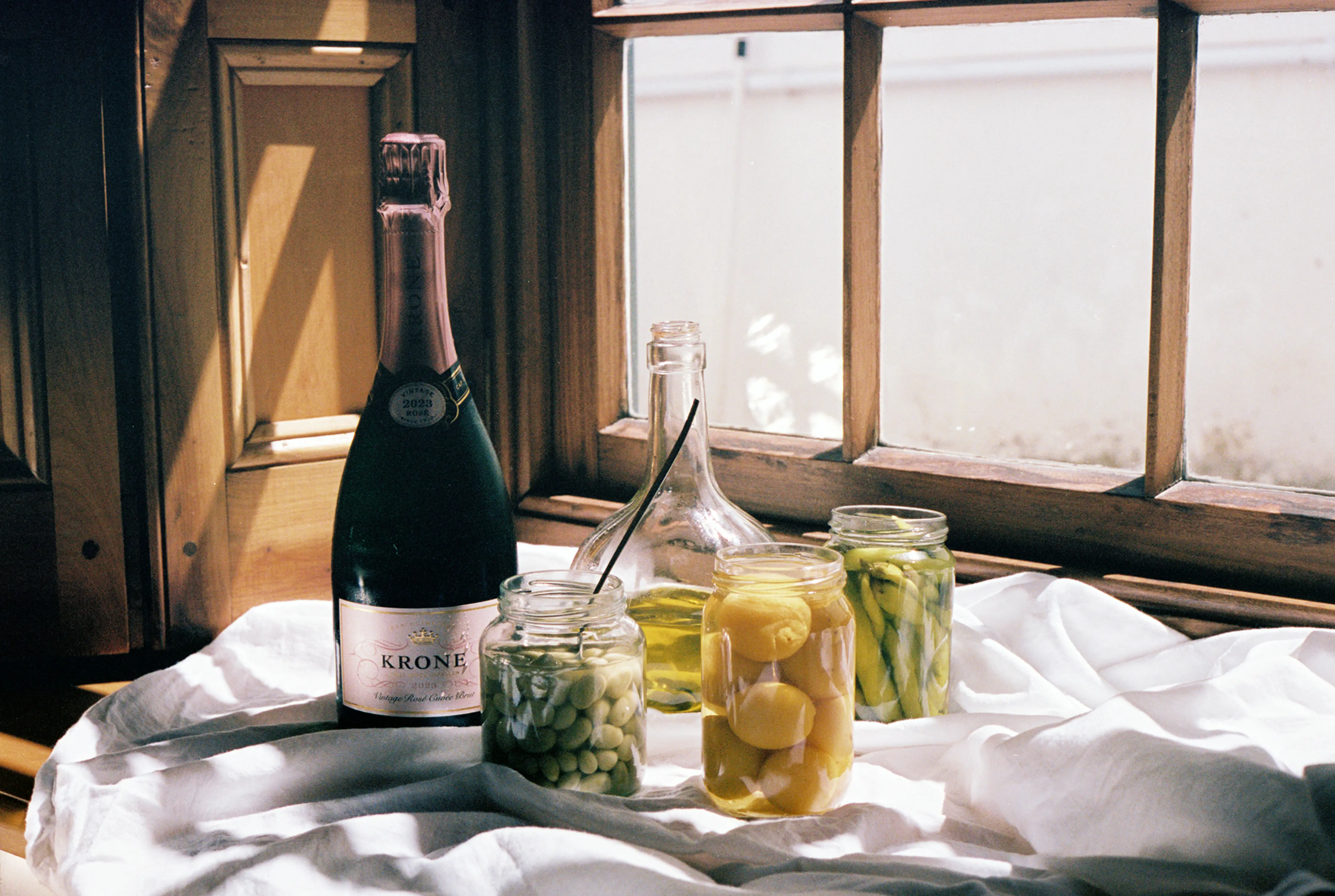
A typical evening starts with fresh focaccia and snacks (house pickles, vegetables that have been soaked and are utterly delicious and beignets, served in a silver dish); handmade pasta with house-made ricotta and sage; kabeljou with a marinière sauce and a pot-roasted potato; a small piece of Wagyu brisket; and of course dessert. In this case chocolate cream made with Madagascan single-origin chocolate, naartjie purée, a cocoa nib snap and milk sorbet.
Vegetarian and pescatarian options are available with advance notice, but Farro can’t accommodate vegan or dairy-free guests. That narrowness is almost part of the appeal — it isn’t trying to be everything to everyone.
Among the standout details are the cordials, made in small batches from whatever’s in season and used to build nonalcoholic pairings alongside the wine list: quince soda with the raviolo, bergamot soda with the kabeljou, pomegranate-and-sumac soda with the brisket.

Absolute focus
It’s the kind of thing that could easily become a product line, but Eloise has no plans to sell the cordials separately or move into food production. Farro doesn’t have the space or facilities for it, and she believes that’s a job for people who specialise in it, not for restaurants treating it as a side project. The Windebanks are dedicated to their craft.
So what is Eloise’s advice to anyone starting a restaurant or a small business?
Understand your overheads, and understand how much your trade fluctuates. But Eloise’s bigger frustration than that side of the business is with commercial leases and insurance contracts that are written, she says, in language that assumes a level of legal knowledge most small operators simply don’t have, with little support available to help interpret it. The Farro team has leant on customers and contacts with legal or industry expertise to review leases and insurance wording, including during a business-interruption claim that took more than a year to settle after the flood.
Eloise credits much of Farro’s survival to being willing to ask for help publicly, rather than working through problems alone — which she thinks is most small businesses’ default instinct. That, and the food — of consistently superior calibre but without the fuss; dinner service only, Wednesday to Saturday; and a Sunday roast once a month.