The JSE is littered with failed international expansion stories, with few South African companies managing to replicate local success in foreign markets. Vukile Property Fund has been a notable exception.
In fact, the specialist retail-focused real estate investment trust (Reit) has built one of the most compelling offshore growth stories in the country’s corporate history. Importantly, it has done so while remaining firmly rooted in South Africa.
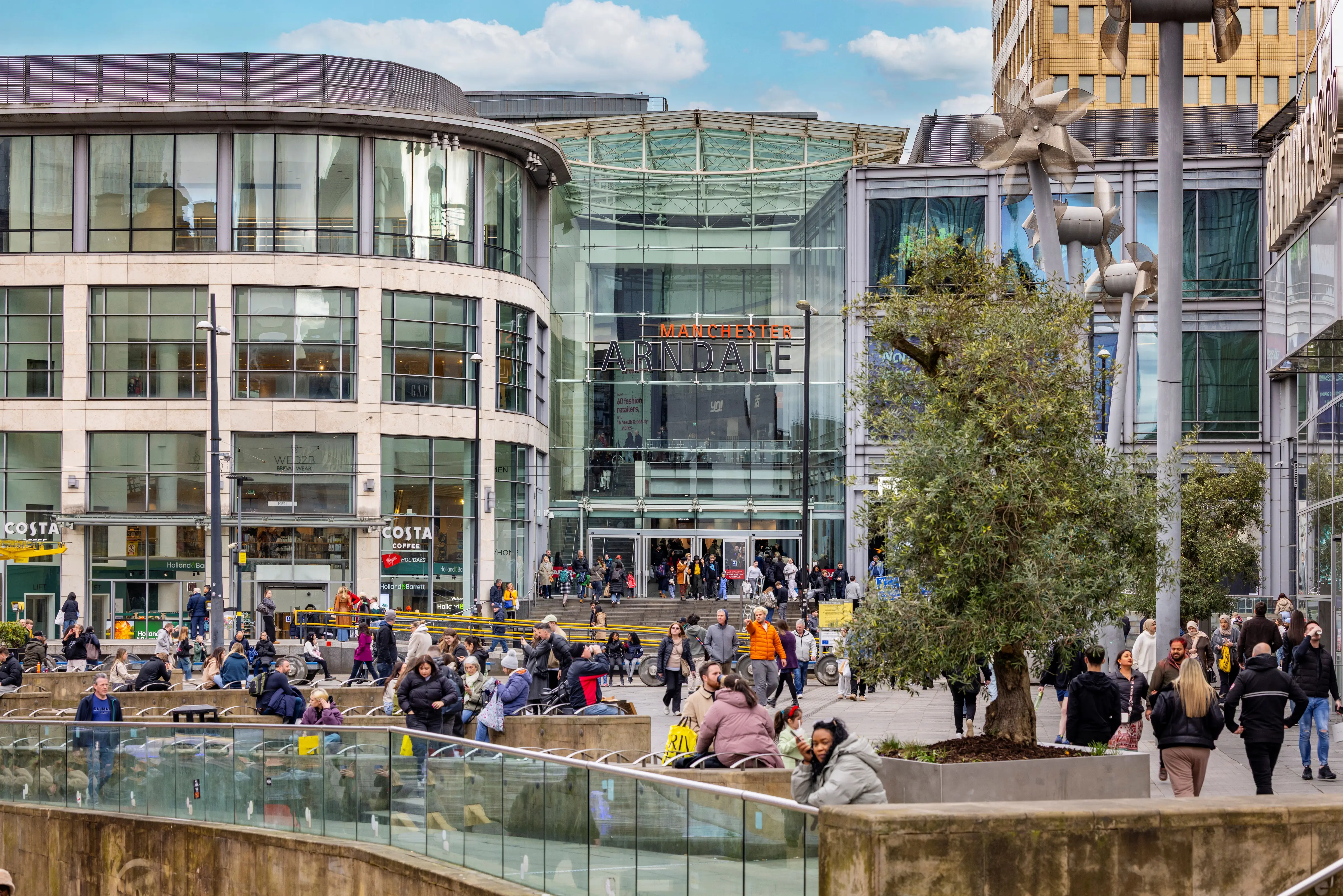
What began nine years ago as a €193m investment in a modest portfolio of Spanish retail parks has since evolved into a colossal €2.2bn investment platform, anchored by some of the most dominant shopping centres in Spain and Portugal.
The Reit’s offshore success was no accident. Vukile CEO Laurence Rapp tells the FM that when the company first looked to take its local footprint of more than 30 township, rural, urban and commuter shopping centres beyond South Africa’s borders a decade ago, he didn’t want to follow the crowd into Eastern Europe, the UK or Australia. Instead, Rapp adopted a contrarian approach.
“We focused our sights on developed markets where we could balance the risk with the emerging market exposure we already had in South Africa.”
The former investment banker, who previously headed strategic investments at Standard Bank as well as its insurance and asset management divisions, had done his homework. He knew Spain was poised for a strong economic and tourism revival. Spain’s highly fragmented retail property market also presented an opportunity for consolidation.

“Landlords were mostly closed-end funds, hedge funds and private equity players focused on short-term returns, who didn’t necessarily invest in their assets. We knew there was a gap for long-term capital players like Vukile,” says Rapp.
But success would require more than simply buying assets. “We were adamant that we were not going to be briefcase bankers, flying in and out to collect dividends. We took a long-term view and wanted to build a strong presence of boots on the ground.”
In mid-2017 Rapp acquired a stake in Castellana Properties (today 99%-owned and listed on the Madrid junior board), and assembled a Spanish team with deep local knowledge. The first acquisition in Spain was a portfolio of nine small- to mid-sized value-type retail parks sized between 3,000m² and 15,000m².
At the time Spain was uncharted territory among local property companies, so it was understandable that Vukile’s move raised a few eyebrows. But the investment strategy was well-considered.
Rapp says: “We wanted to start small, focusing on retail assets that offered value-unlock potential through expansion, refurbishment and re-tenanting opportunities, and over time recycling capital into larger and better-quality shopping centres.”
And that’s exactly what Vukile accomplished. Despite the advent of Covid in 2020, which put a temporary dampener on offshore growth ambitions, the value of Castellana’s assets had surpassed €1bn by early 2024. Then in September 2024, Castellana entered Portugal for the first time via the acquisition of a portfolio of three shopping centres for €176m.
In the two years since, another five acquisitions worth more than €900m were added to the Iberian portfolio. So in less than a decade, the value of Castellana’s Iberian shopping centres ballooned more than tenfold, from €193m to €2.2bn, placing it among the three largest retail landlords in Iberia.
Though other JSE-listed property stocks have since followed Vukile into Iberia, Rapp is unfazed. He believes Vukile’s extensive local expertise and well-established relationships with retailers, real estate investors and other landlords remain a significant advantage. “There is not a deal in Spain that doesn’t come across our table today.”
He’s quick to add that Vukile remains disciplined in how it allocates capital.
“It’s all about buying the right assets at the right prices. We say ‘no’ to a lot more deals than we say ‘yes’.”
That investment prudence has been central to the company’s transformation over the past 15 years. Under Rapp’s leadership, Vukile’s asset value has grown from about R5bn when he joined the company in 2011 to R63.7bn today. Its market capitalisation has simultaneously surged from roughly R3bn to about R37bn, making it the JSE’s third-largest South African-based property counter after Growthpoint Properties and Redefine Properties with equally strong liquidity.

Rapp believes investing in human capital is fundamental to building a successful business, regardless of location. “Having the best team in place locally and offshore is key to creating magic with our physical assets.”
The same playbook is now being applied in Italy. Earlier this year, Vukile bought a 35% stake in pan-European retail asset manager Pradera, which already has a strong local presence in the country. Soon after, the group acquired three shopping centres in Italy for €115m.
What makes Vukile’s growth story particularly impressive is that the Reit continued to deliver above-market earnings growth while aggressively scaling its offshore interests.
Vukile has grown earnings and dividends every year for the past 22 years since listing, except in 2020 when Covid struck. Moreover, Vukile ranks among the JSE’s top five best-performing Reits by total return over both five and 10 years, according to figures from the South African Reit Association.
Despite its growing international footprint, with offshore assets now accounting for roughly 70% of its portfolio, Rapp rejects suggestions that Vukile’s expansion abroad reflects a lack of confidence in South Africa’s retail sector. Far from it.
“We have tremendous appetite to invest further and grow our domestic portfolio of shopping centres,” he says. “The challenge is simply finding the right assets, as the properties we’re interested in don’t come along often.”
That hasn’t prevented Vukile from steadily growing its local shopping-centre portfolio, both in size and quality. In fact, as Itumeleng Mothibeli, Vukile’s managing director for South Africa, points out, the group’s domestic portfolio has undergone a significant evolution over the past decade.
Understanding communities
That transformation was kick-started by the takeover of retail-focused Synergy Income Fund in 2015. The attraction, he says, was Synergy’s portfolio of township and rural shopping centres such as Gugulethu Square Shopping Centre in Cape Town, Setsing Crescent, later renamed Maluti Crescent in Phuthaditjhaba and Highland Mews in eMalahleni.
“The Synergy deal took our retail assets from 15 to 25 and really cemented our specialist retail focus on township, rural, urban and commuter malls that serve mostly lower-income shoppers.” The latter include Dobsonville Shopping Centre in Soweto, Daveyton Mall on the East Rand, Mall of Mthatha and the recently acquired Botshabelo Mall in the Free State.

The team spent years building specialist capabilities in this segment. The aim was to create what Mothibeli describes as a stable, core investment-grade portfolio.
The results are reflected in the numbers: nine of Vukile’s top 10 assets have been redeveloped or expanded over the past decade; the local portfolio has grown from 15 to 34 assets, while its value has more than tripled from R6.3bn to R19.5bn; and the average value of Vukile’s local retail assets has increased from R245m to R573m.
But Vukile’s rise as one of South Africa’s leading players in emerging consumer markets has not been driven by scale alone. Mothibeli stresses that understanding the communities served by its shopping centres has been equally important, alongside building strong relationships with retailers.
“We have a strong customer-centric approach and combine data analytics with deep local insight to create a tenant mix that improves shopper experiences.”
He says this approach is ultimately what drives performance. Key metrics such as turnover and trading density growth have consistently outperformed industry benchmarks since 2020. The local portfolio achieved a healthy 10.3% like-for-like net operating income growth for the year to March 31, while rental reversions accelerated from 2.4% to 3.7%. The vacancy rate stabilised at a negligible 1.7%, while foot count finally recovered after a challenging four-year period.
Mothibeli notes that ultimately the long-term performance of South Africa’s retail sector will depend on broader macroeconomic factors such as GDP growth and addressing unemployment. That said, he is encouraged by government targets to create one million jobs and lift GDP growth to 3% by 2030.
“If we could do so well in challenging times, imagine what we can do if the country gets that right. We can only fly.”