If ever there was a reason to keep pursuing — and desperately accelerating — reforms across the economy, the National Treasury just made it.
“Staying the course on reform implementation is expected to add 3.1 percentage points to the level of GDP by 2034,” it says in its medium-term budget policy statement released on Wednesday. But it cautions that “large-scale structural reforms take time to implement, with economic growth gains only materialising over the medium to long term. In the short term, however, there are immediate benefits to confidence that can boost investment.”
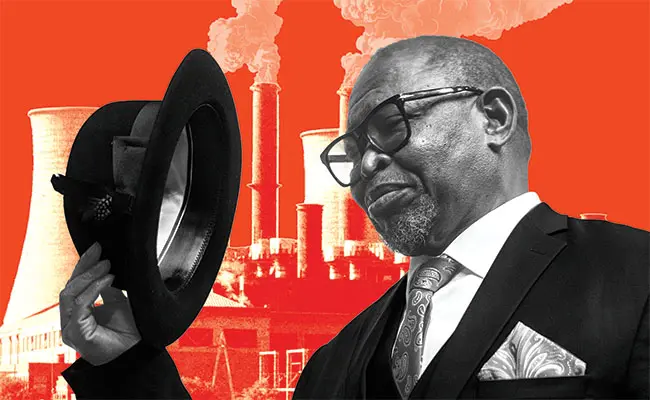
In his speech to parliament, finance minister Enoch Godongwana said “growth remains too low”, adding that it could exceed 3% a year if reforms held.
For now, the Treasury expects GDP to expand by 1.2% in 2026, down from the 1.6% pencilled in at the February budget. Soon after that budget, Godongwana said, “Israel and the US attacked Iran”, and the Strait of Hormuz was closed. Growth is expected to reach 1.6% in 2027 and 2% by 2029.
That is too slow to dent unemployment, which rose to 33.6% in the second quarter. There are 1.8-million more people out of work than before the pandemic, a gap the Treasury says “reflects weak private investment and the contraction of labour-intensive sectors”.
Different scenarios
The Treasury has modelled three alternatives to its baseline. In the best case, an expanded second phase of Operation Vulindlela succeeds. Growth reaches 2.3% by 2029, and by 2034 real GDP is 3.1% higher than in the baseline.
A second domestic scenario assumes better public investment, driven by reforms that “root out inefficiencies and strengthen collaboration with the private sector”. Growth averages 1.8% over the medium term, against 1.6% in the baseline.
The global downside assumes that Middle East tensions re-escalate in the first half of 2027, sending oil above $100 a barrel. “Higher oil prices weaken South Africa’s exchange rate, given its dependence on energy imports,” the Treasury says. Growth averages just 1.5% between 2026 and 2029, and inflation rises to 4.4% in 2027, compared with 3.8% in the baseline.
The Treasury says rising oil prices and uncertainty have weighed on private sector investment, which fell 1.1% in the first half of 2026 compared with the same period in 2025. Public investment — by government and state-owned entities combined — rose 5.2%.
It expects growth in fixed investment to strengthen from 0.7% in 2026 to 3.8% by 2029 as companies respond to reforms such as opening electricity generation and transmission to private participation and concluding port and rail concessions.
The private sector accounts for about two-thirds of gross capital formation, Boipuso Modise, the Treasury’s deputy director-general of economic policy and international co-operation, told reporters. The improved outlook for gross capital formation, she said, factors in the renewable energy independent power producer procurement programme and “includes a very conservative view on embedded generation”. It also builds in plans at state-owned companies, whose turnarounds the Treasury expects to drive investment.
Delays
Asked whether the forecasts were too bullish, Modise said: “Our view is that they’re actually pretty conservative and there’s a fair amount of upside risk possible in that regard.”
That will help offset the pain being felt by consumers, with household consumption growth expected to slow from 3.6% in 2025 to 2.3% this year and 1.7% in 2027 before recovering.
The Treasury concedes that the more complex reforms are “taking longer than planned”. Electricity distribution reform is delayed, as is the restructuring of the freight rail infrastructure manager. So are water reforms to improve service delivery and set up an independent economic regulator.
Still, broad agreement has been reached on unbundling Eskom and Transnet, and a competitive electricity market is due to launch in April 2027. Passenger rail journeys rose from 39-million in 2023/2024 to 101-million in 2025/2026, signifying the progress in improving the country’s logistics network.
Capital spending is the fastest-growing item in the budget: payments for capital assets rise 5.3% a year over the medium term. “Our goal is not simply to spend more. It is to spend better,” Godongwana said. “While most funds are spent, projects are often delayed, incomplete or fail to deliver the intended benefits.”