
The Wall Street Journal led this week with a striking story headlined “Corporate America’s profits are booming — and signal more good times ahead”. The numbers justify the enthusiasm.
S&P 500 earnings per share were up 53% in the second quarter, according to London Stock Exchange Group data cited by the paper.
Financial data platform FactSet calculates the index’s net profit margin at 15.7% — the highest since it began keeping the series in 2009. Even excluding Alphabet, whose investment gains flatter the number, the margin is 14.4%.
What does the equivalent picture look like in South Africa?
The answer is: surprisingly respectable. Getting an exact like-for-like historic margin for the FTSE/JSE all share index is irritatingly difficult because the FTSE does not publish the aggregate earnings-and-sales series that FactSet provides for the S&P, with that data needing specialist terminals like Bloomberg or Iress used by traders and analysts.
Ninety One portfolio manager Melville du Plessis pointed out to Moneyweb that local equities could deliver earnings growth of about 26% this year. Momentum Investments’ head of asset allocation Herman van Papendorp wrote in January that his team was assuming 16% earnings growth for the local equity market for 2026, against a consensus estimate of 21% at the time.
That hardly suggests South African listed companies are looking sickly. It also puts them comfortably within the broader emerging-market story.
Goldman Sachs calculated the net profit margin for emerging markets, excluding China, at 13.8% at the end of 2025, against 11.4% for developed markets outside the US. Ninety One argues the recent emerging-market rally has been earnings led. Emerging-market earnings growth is running ahead of that in the other major regions.
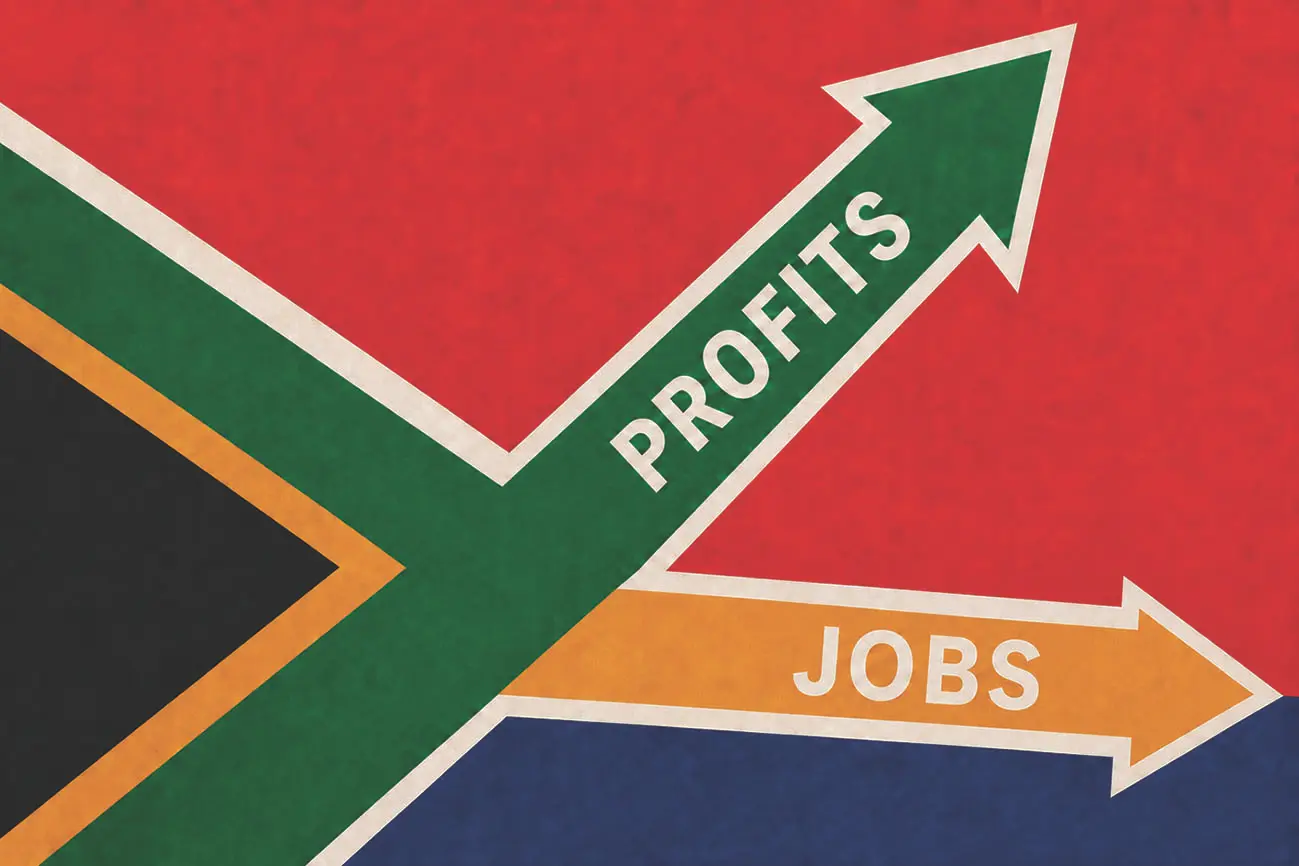
The profits are booming. But employees aren’t sharing in it.
US private-industry wages and salaries, as measured by the employment cost index, rose just 3.1% in the year to June, while inflation-adjusted wages and salaries fell 0.4%. Corporate margins, meanwhile, are setting records.
South Africa’s picture is more complicated.
Stats SA figures show average monthly earnings up 5.9% in the year to February, well ahead of inflation. Basic salaries and wages across the formal sector rose 4.6%.
But employment went the other way. The formal sector shed 41,000 jobs in the second quarter, while the number of unemployed people rose by 345,000 over the same quarter, to 8.5-million.
Investors have spent years worrying that inflation, labour shortages and political pressure would squeeze corporate margins. Instead, listed companies across the US and much of the emerging world have become remarkably good at protecting them.
Employees, judging by the US wage data, less so. In South Africa, the story may be harsher in a different way: wages for those still in formal employment are rising in real terms, but there are fewer of those jobs.
This is a long-running story, and one with an obvious limit. An economy in which profits can grow faster than the incomes — or the number — of the people expected to buy what companies sell, eventually starts working against itself.


