

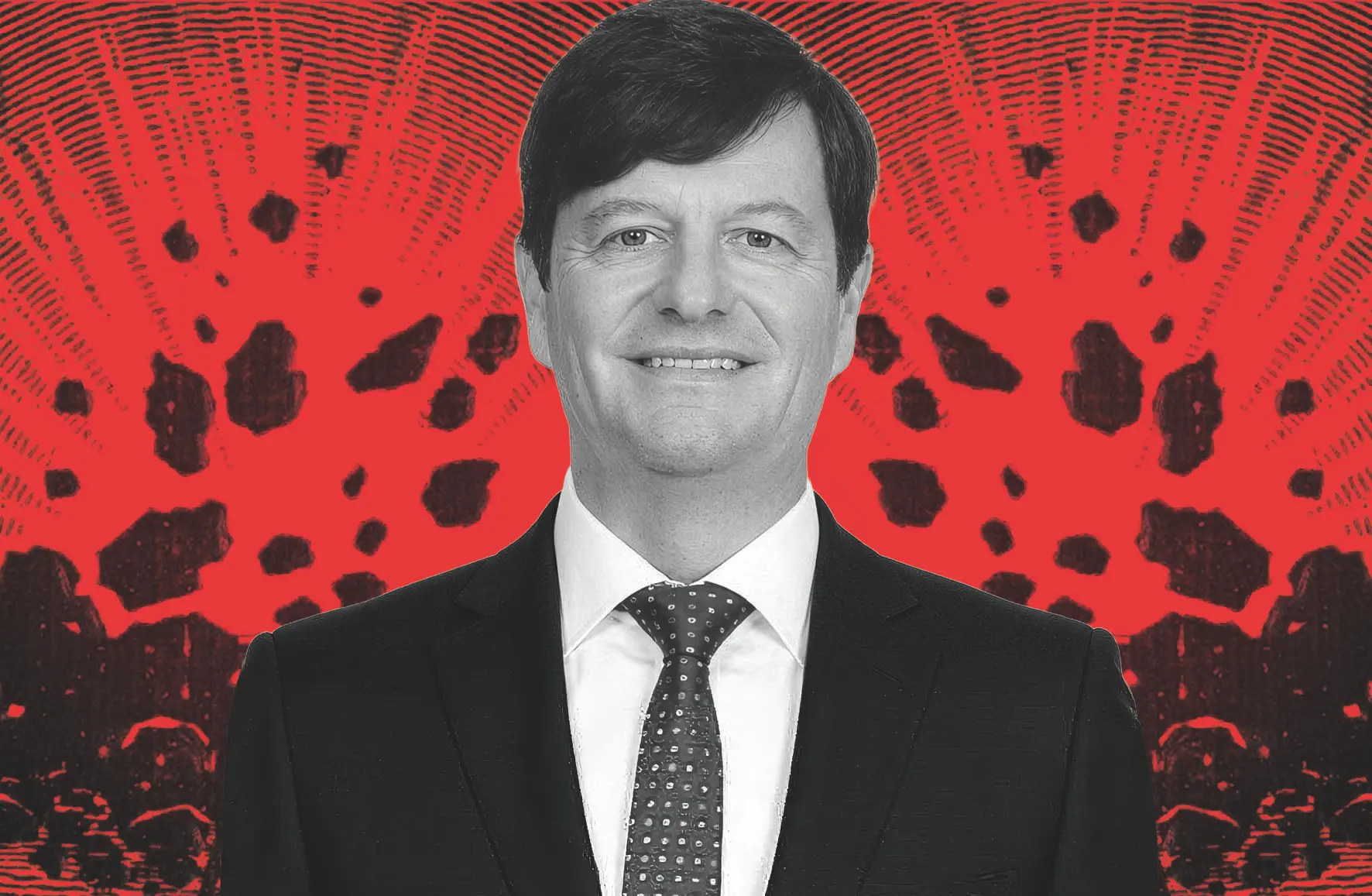
Spare a thought for Alan Dickson, whose introduction to mining chemicals and explosives group AECI, nicknamed “bang-bang” by traders, has been a bumpy ride.
His appointment as CEO in June was greeted by a 4% fall in the share price, perhaps reflecting investor unease over his previous 12-year stint at the helm of local industrial group Reunert, during which the share price largely went sideways.
Of course, Reunert had to contend with the formidable headwind of South Africa’s broader industrial decline. Even so, its long-suffering shareholders, accustomed to results that often promised more than they ultimately delivered, may have felt a sense of déjà vu when AECI released its first interim numbers under Dickson. The results disappointed the market and sent the shares down another 12%.
In fairness, Dickson only joined AECI on July 1, the day after the reporting period ended, so the results had nothing to do with his stewardship.
At most, cynics might wonder whether he indulged in the age-old new-CEO practice of “kitchen sinking” — taking as much bad news, impairments and restructuring pain as possible in the first set of results, thereby clearing the decks and establishing a lower base from which performance can improve.
There may be an element of that, but the more likely explanation for the market’s negative reaction is that AECI reported another sizeable impairment at its troublesome Schirm Germany operation, free cash flow swung sharply negative and working capital moved well above management’s target range. Perhaps most importantly, the group still appears some distance from the ambitious profitability targets set by the previous management team.
That’s a pity because underneath those disappointments, AECI’s operational turnaround is clearly gaining traction.
Reported revenue fell 4% to R15.1bn, but disposals distorted the comparison. On a like-for-like basis, revenue rose about 3% and ebitda 11%, vs a reported 2% increase to R1.61bn. Operating profit climbed 20% to R837m, while headline earnings per share rose 8% to 653c.
The standout remains AECI Mining, which is benefiting from higher volumes and strong execution across Africa and Asia-Pacific against a supportive commodity price backdrop. Revenue rose 6% to R9.3bn and ebitda by the same margin to R1.42bn, while its ebitda margin held steady at 15%. Bulk explosives volumes increased 14%, electronic detonators 12% and boosters 17%, helped by new contract wins.

During the earnings call, an analyst put Mining’s return on invested capital (ROIC) at about 23%, compared with 13% for the group — a figure management did not dispute. That partly reflects the attractive economics of a specialised industry with relatively high barriers to entry, sticky customer relationships and an increasingly capital-light international model, where AECI can expand by importing ammonium nitrate and deploying smaller modular facilities rather than building large integrated plants.
Modderfontein, AECI’s key South African explosives manufacturing complex, is also seeing the payoff from earlier investment in asset reliability and the resulting operating leverage. AECI plans to spend a further R700m–R900m over the next three to four years to optimise the site and improve operational performance. The investment will weigh on cash flow in the short term but should support stronger margins and more dependable production over time.
The Chemicals core business also performed better than the headline divisional numbers imply. Revenue grew 2% and ebitda 14%. The division spans industrial and speciality chemicals, water-treatment products and plant health, which supplies crop protection and plant nutrition products to farmers. The plant health unit should also benefit from its usual seasonal uplift as the summer planting season approaches.
But Schirm — AECI’s German contract manufacturer of agrochemicals such as herbicides and fungicides, as well as other speciality chemicals — continues to spoil the party.
The remaining German business moved back into operating losses despite restructuring last year, resulting in a R320m impairment of goodwill and intellectual property. AECI has now written off all remaining goodwill and capitalised intellectual property relating to Schirm.
The impairment itself is excluded from headline earnings. What matters is what it says about Schirm’s future economics. AECI has materially cut the profitability assumptions underpinning Schirm’s valuation, including reducing the expected average trading margin from 2.7% to just 1.1%.
During the earnings call, Dickson said Schirm’s problems were concentrated in January and February, when operational difficulties meant the plant “did not run at the required volumes”, leaving losses that could not be recovered before the half-year. Performance has improved since then, but he conceded that “it remains a tough environment with still a few operational issues that we need to solve”.
More importantly, a large portion of the cost rationalisation has already been completed. Dickson said the priority now is getting “good-priced volume through the plant”; he plans to conduct a more thorough review of Schirm over the next four or five months.
The other major disappointment was cash conversion. Free cash flow deteriorated from a R251m inflow to a R952m outflow as working capital rose to 19% of revenue against management’s 14%–16% target.
There are mitigating circumstances. Higher raw material prices inflated inventory values, while AECI deliberately built stocks of critical inputs because of Middle East supply disruptions. The plant health unit also normally builds inventory ahead of the planting season.
Still, net debt increased from just R465m in December to R1.74bn by June, though at a conservative gearing ratio of 15%.
Management expects some of the working capital build to unwind in the second half. However, CFO Ian Kramer cautioned that the extent of the release would depend on how Middle East supply chain disruptions evolve and on the impact of the projected El Niño on the plant health business.
Perhaps the biggest cloud over AECI, however, is one inherited from the previous management team. Under former CEO Holger Riemensperger, AECI proclaimed an ambition to roughly double the profitability of its core businesses by 2026, with an annualised ebitda run-rate target of R5.6bn–R6.3bn by the end of this year.
At the current run rate, that looks increasingly remote.
While Dickson talked about leveraging AECI’s core strengths, improving resilience and raising the quality and predictability of earnings, that target received no prominence in the latest presentation. Investors will have to wait and see whether it survives what management described as Dickson’s “strategic refresh”.
The interim dividend was increased 16% to R1.16 a share, suggesting the board remains confident enough about the balance sheet and second-half cash generation.
In an analyst note after the results, SBG Securities said AECI’s underlying performance was better than the market reaction suggested, with headline earnings ahead of its forecast and Mining continuing to deliver strong returns. Its main concern is cash conversion, with working capital still well above target, while Mining’s ROIC highlights the scope for tighter capital allocation. SBG believes Dickson’s strategic review could therefore become an important catalyst if capital is redirected towards higher-return businesses or underperforming assets are sold. It nevertheless cut its 2026 earnings forecast by 6% and reduced its fair-value range to R130–R140 a share, arguing that a sustained rerating will require stronger free cash flow and better group-level returns.
Other analysts argue that while the long-term fundamentals for both mining and agricultural demand remain favourable, the easier gains from restructuring, disposals and deleveraging will eventually run their course, leaving future earnings growth increasingly dependent on extracting better returns from the businesses that remain.
At R100 a share, AECI trades on an undemanding earnings multiple of below eight if the interim headline earnings are annualised. A rerating, however, will require Dickson to prove that “bang-bang” can finally deliver the big bang investors have been waiting for.


